So many people think that buying land in Mauritius is a great investment. It’s a luxury island… Space is limited… Owning land here must be evergreen… right? To be fair, that logic isn’t wrong…
People intuitively understand what drives land value:
scarcity
location
long-term demand
That’s exactly what makes certain land very valuable. But here’s the part that’s often missed… The land that benefits from those dynamics isn’t the land that most people can actually buy.
The beachfront plots, the prime coastal zones, the land that holds long-term strategic value…
it’s already owned
it’s rarely sold (and when it is, it’s usually part of a larger development or held by major players…)
The people who own that prime land aren’t waiting to resell it for a profit... They’re already monetising it (through hotels, resorts, and long-term projects).
So, what’s left on the market (that us regular people can actually access) is still relatively valuable… But it doesn’t play by the same rules. Before deciding whether buying land in Mauritius is ‘worth it’, it helps to understand one thing first: what land in Mauritius actually looks like.
What does land in Mauritius actually look like?
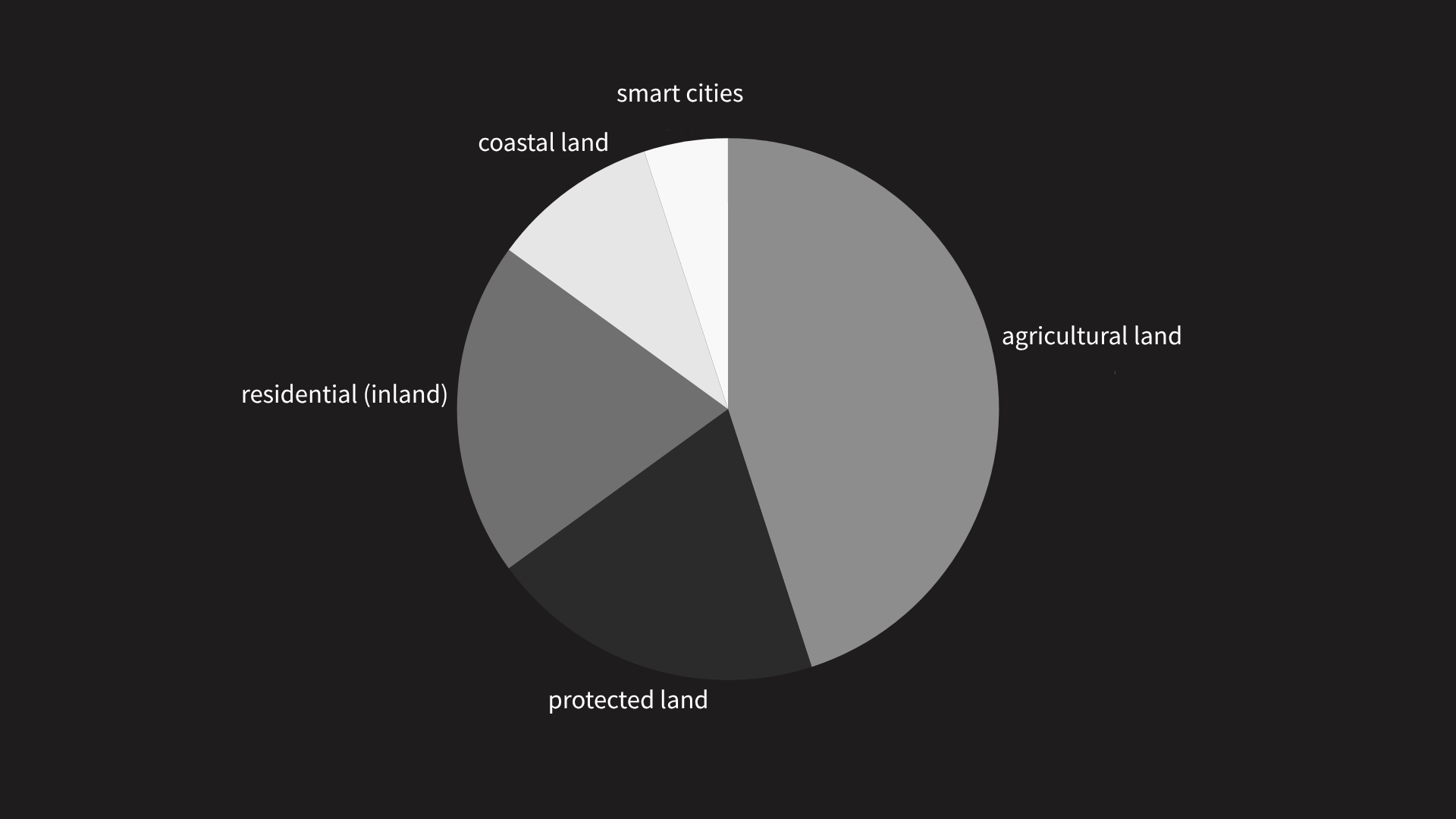
Take a quick look at the two charts below. The goal here isn’t to give you exact statistics to memorise. It’s simply to help reset the way that most people picture land in Mauritius.
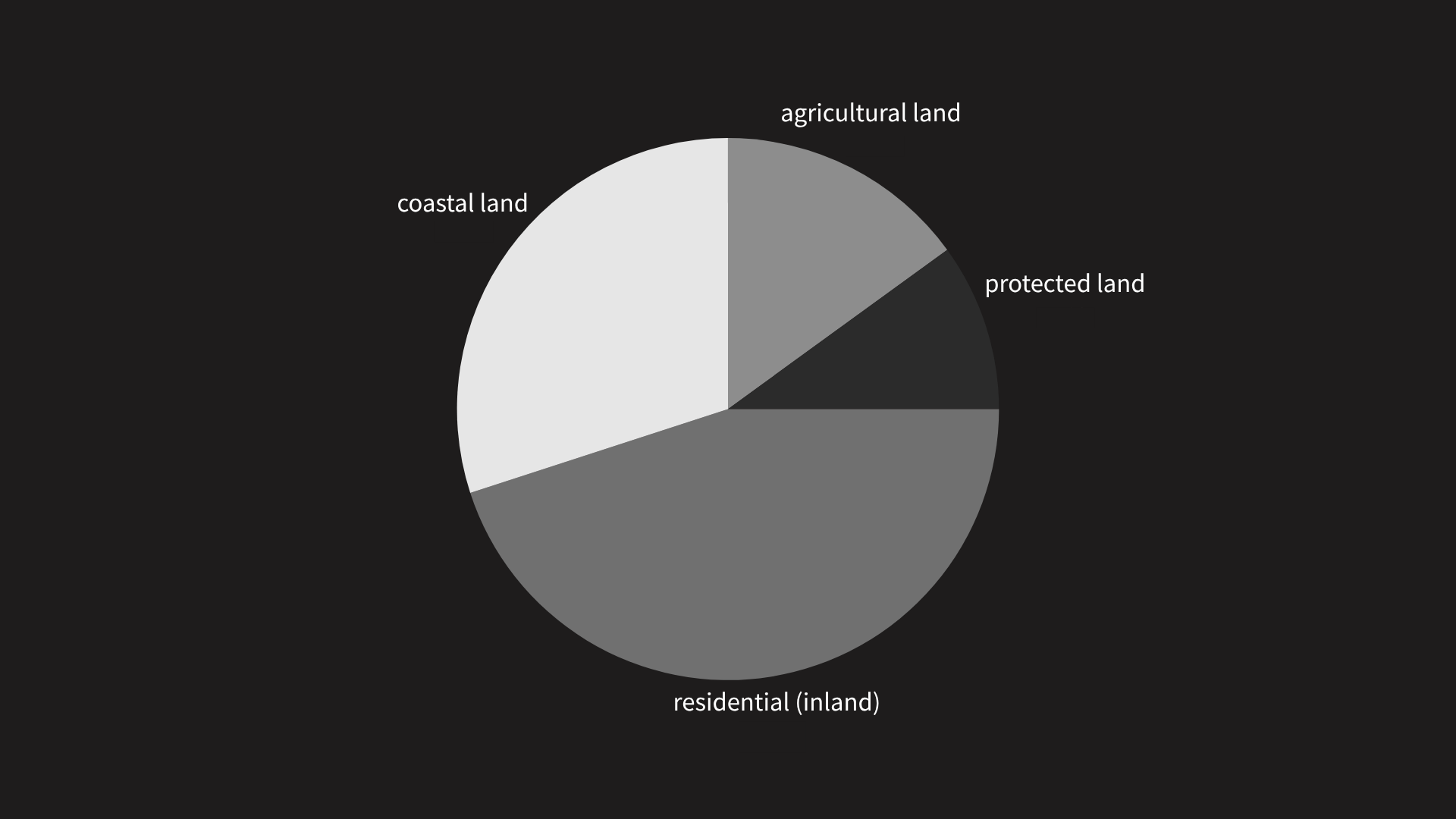
Most people imagine a market with:
a lot of land available to buy
coastal land being relatively common and accessible
inland and government protected land making up only a small part of the island
And honestly, that assumption makes sense from the outside. Mauritius is marketed as tropical, luxurious, coastal, and resort-driven… So naturally, people picture the island as being heavily centred around premium coastal real estate… But when you look at the reality, the picture shifts.
A large part of Mauritius is actually:
agricultural land
protected land
mountainous or environmentally restricted areas
That already removes a huge portion of the island from the ‘normal residential market’. Coastal land also ends up being a much smaller piece than most people expect… and a lot of it is already owned, developed, or held long-term. Most of the actual buying activity happens inland. You’ll also notice a small slice for smart cities… These are newer planned developments that have become much more visible over the last decade (even if they still represent a small part of the market).
So Mauritius is a luxury island… But that doesn’t automatically mean that the average buyer has access to the kind of land that creates long-term luxury-level wealth.
What ‘residential land’ actually means
When most people say “I want to buy land,” they mean:
plots in morcellements (subdivisions)
residential-zoned plots
places where you can realistically build a house
And in Mauritius, this mostly means inland land. Good locations can absolutely appreciate in value… but residential land doesn’t automatically behave like a scarce luxury asset.
Why agricultural land changes everything
This is probably the most misunderstood part of the Mauritian land market… A huge portion of the island is agricultural land (sugar cane fields being the classic example).
From the outside, this can create the impression that:
there’s still endless land available
buying land is easy
future development potential is everywhere
But agricultural land and residential land aren’t the same thing…
In many cases:
you can’t freely build on it
conversion to residential land has strict rules
infrastructure (like roads, electricity, water) can be missing
long-term approvals can become complicated
A lot of agricultural land stays agricultural for a very long time… which isn’t a bad thing. It helps make Mauritius feel less dense than it really is. Without large green areas, the island would feel more crowded.
How much land in Mauritius is actually protected?
Another big piece of the puzzle is protected land. When we use the word ‘protected’ in this context, we’re not just talking about strictly guarded national parks. We’re including:
national parks (like Black River Gorges)
nature reserves and forest areas (like Ebony Forest)
mountainous or steep areas (like Le Pouce)
other conservation areas (like Île aux Aigrettes)
Even though not every forest is 100% protected, a large portion is either government-owned or has development restrictions… All this land is basically off-limits for normal housing or big developments. Again, it’s a good thing. Protected land is also part of what gives Mauritius its long-term appeal… The mountains, the greenery, and the natural spaces play a big role in what makes Mauritius a gem.
Is coastal land actually accessible?
This is where there’s the biggest gap between expectations and reality…
When people think about valuable land in Mauritius, they’re normally imagining:
beachfront properties
sea views
prime coastal regions
And to be fair… this is the type of land that behaves like a long-term luxury asset. The problem is that most of it is already controlled by hotels, large groups, wealthy families. And (unlike residential land) prime coastal land is rarely recycled back into the open market. That’s an important detail that many ignore... The people who own strategic coastal land almost never wait to ‘flip’ it later… They’re already monetising it through resorts, hotels, villas, and tourism-related businesses. So while beaches are public in Mauritius, the land surrounding them is often economically locked in. That’s why Mauritius can simultaneously feel luxurious, land-constrained, and difficult to access as an average buyer.
What are Smart Cities and do they matter?
Smart Cities is one of the newer pieces of the Mauritian real estate market. You’ve probably heard names like Moka, Côte d’Or, Mon Trésor… They’re designed around housing, offices, shops, and lifestyle spaces. So unlike traditional land purchases, you’re not just buying a random plot… You’re buying into a master-planned community with better infrastructure and long-term vision.
Those elements attract much more foreigners compared to traditional residential areas. They represent part of where the Mauritian real estate market is heading.
So… is buying land in Mauritius actually worth it?
Buying land works when:
you understand where the real opportunities are (mostly inland)
you have a clear plan (build, hold, or develop)
you think 10+ years ahead
It leads to disappointment when:
you’re chasing the ‘coastal dream’
you expect land to automatically multiply in value
you buy without understanding restrictions
Mauritius being a luxury destination doesn’t mean that all land behaves like a luxury asset… The island is small, densely used, and carefully regulated.
Pou résumé
Mauritius might look like a premium real estate market… but not all land is equal. Most opportunities (for regular buyers) are inland residential plots. Agricultural land is widespread but comes with restrictions, protected land reduces what’s actually usable, and coastal land is limited and rarely accessible. Buying land can work… but it’s not automatically a cash cow.